

Kids Beds Bunk
Bunk beds can add drama to kids' rooms and provide a sense of adventure. Ms. Keenan adds a shelf for books, or a reading light in each sleeping nook to make bunk beds more appealing to children.
A lot of our kids' beds bunk are convertible to two complete twin beds which is ideal if you intend to move your children into their own bedrooms at some point. Pick from finishes like white, brushed gray and rich walnut.
Stairs and ladders
When you are choosing a bunk bed for your kids you can choose to pick between stairs or ladders. Ladders are cheaper and easy to set up and provide an easy method of climbing into the bed at the top. They are also safer than stairs, as they provide a wider surface for children to walk on and have an integrated handrail. They also have grooves on the steps which can prevent slippage while climbing up or down the bed.
If you like the look and design of stairs, they could be a beautiful addition to your bunk bed. Staircases can also be utilized in rooms that are small as they don't protrude as ladders. They are typically constructed of metal or wood and can complement the various styles of bedrooms. Some staircases are equipped with storage drawers which can be an ideal way to expand the size of bunk beds.
Another thing to consider when deciding between stairs and a ladder is the age of your child. It is recommended that no one sleep on the top bunk under the age of 6, children who are comfortable with vertical climbing might be better off using stairs than a ladder. If you plan to use your bunk bed for guests, such as older children or adults with limited mobility, it is best to use stairs.
A straight staircase on the side of the bed requires 95" of space each side. If you do not have enough space, you can opt for a u shaped staircase which does not require as much space but still allows you to access the top bunk safely and securely. Some beds come with the option of detaching the stairs when not in use, which further reduces their footprint and makes them more versatile for rooms that can be used in multiple ways. You can also find stairs that connect to the bottom of the bed, which eliminates the requirement for a separate handrail, and makes it easier for children to climb up and down.
Guard Rails
Guard rails let children climb into and out of their beds on their own and give them an experience of independence and security. However, they must be placed properly, ensuring that there aren't any gaps or loosening occurs between the rails that guard the bed frame. If you decide to install guard rails, follow the manufacturer's instructions and check them on a regular basis for any holes or looseness that could lead to entrapment.
Keep bunk beds clear of electrical appliances and other things that could be projectiles while your children are playing or sleeping. Be sure to place bunks away from windows, as they could pose a fall risk if kids get up on the top floor.
You may want to install an evening light on the ladder to illuminate the steps up and down if your child wakes at the night to go to the bathroom, or if they are awakened by a storm to leave their bedroom.
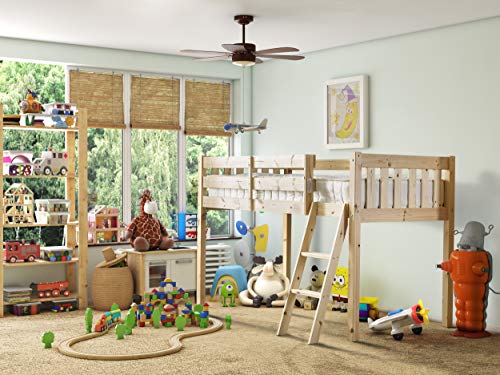
Another excellent safety feature for bunks is a safety net, which can be installed at the top to prevent children from falling off while asleep or playing. This is a great idea, especially for older children who are more likely to sleep on the top bunk.
The guardrails must be securely attached to the bunk beds and can't be removed without tools. Openings in the guardrails above the mattress foundation should not be greater than 3.5 inches to prevent strangulation and entrapment. The wedge block is placed on Figure 1 in each opening of the uppermost guardrail member and above the mattress foundation. Apply a force of 33 lbf (147 N) in a perpendicular direction to the plane of the large edge of the block for one minute.
kids bunk bed 's a good idea tell your children not to hang any objects on the ladder or guardrail, such as belts, clothing, and sports equipment. Instead you should make use of a clothes rack to prevent these objects from becoming a strangulation risk for your child. Be sure that not more than one child can sleep on the top bunk. This could result in a risky imbalance and even falls.
Mattresses
When choosing a mattress for bunk beds, take into account the size and age of your child. A bunk mattress should last at the least eight years or until siblings are no longer sharing a bedroom. You should select one that can grow with your child, and still provide enough comfort as they get older.
Bunk mattress sizes are typically twin or full-size, and there are plenty of alternatives that will be suitable for either. If your child is suffering from allergies or asthma choose a hypoallergenic bed with a dust-mite barrier and moisture-wicking cover. A mattress with an antimicrobial layer will protect the foam from harmful bacteria and germs.
Another crucial aspect to consider is the feeling of your mattress. Children are typically heavier than adults, and require a mattress which is firm, yet comfortable. Many latex and hybrid mattresses have a firm and a soft side to accommodate the needs of both children.
Memory foam mattresses are great for kids, but we don't recommend them because they tend not to cool well and can be a strain on the spines of young children. You should consider a hybrid or a latex mattress instead, which offer solid support with cooling infusions that will ensure your child or guest is asleep cool and comfortable.
Low-profile mattresses are usually the best option for bunk beds for children. These mattresses are designed to be smaller than normal mattresses, and increase the safety rail's height on the top bunk. They also eliminate "filler" materials to provide the highest quality in an ultra-slim design.
Think about an innerspring model or a hybrid with upper comfort layers which can be removed and replaced as your child develops. These models will give you a good idea of how the mattress will hold up as your child grows and you can always put in a mattress pad or bed skirt to stop it from slipping off the frame. Some beds even have an integrated lip or side rails to prevent this from happening.
Storage
Bunk beds are a great option for saving space in shared children's rooms. Bunk beds can also be a cheaper alternative to purchasing two full-sized single beds. Many bunks also provide the option of adding a trundle bed that can be hidden under the bunk that is not in use.
You might want to consider installing a bedroom for your child furniture combination set that includes bookcases, desks, and/or dressers to maximize storage and space in a room with bunk beds. This will let you store all your child's clothing as well as toys and personal belongings in one place instead of cramming everything into chests or closets that are overstuffed. The sets of kids bedroom furniture can be found at a variety of stores. They meet federal safety standards.
Stacked bunks can become a playground for the imagination as kids can transform the space beneath into cozy places to hide and play. Designer Elizabeth Georgantas stacked six bunks to create the ultimate children' space. It can be used to sleep, play or even for superhero cape twirling. The room is decorated with a bubble wallcovering of Chasing Paper, and the ceiling is painted Benjamin Moore Blue Jean.
If you're unable to construct a staircase for your stacked kids bunk A ladder is an easy solution. They are constructed with a combination Single Socket Flange, Single Socket Degree Side Outlet Fittings. They can be easily adjusted to increase or decrease distance between ladder rungs. The ladder rungs are also set directly on the ground rather than above, to make climbing easier.
Installing loft beds that can be lifted to just above the ground is another way to maximize the space of the bunk bedroom. This allows you to slide desks, dressers or toy chests underneath the beds on top. This is a great way to maximize space in small bedrooms or large family homes where beds must be capable of accommodating multiple sleepers.